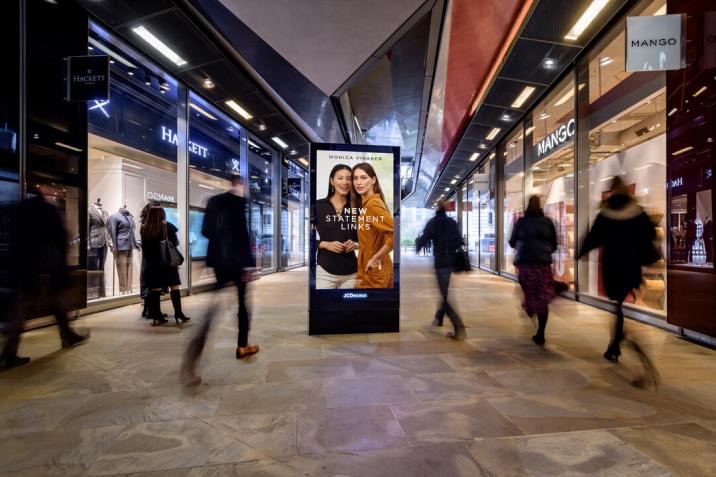
A straight-talking guide from Focus Media Outdoor — over 20 years in the industry
Shopping centre advertising is one of the most powerful ways to reach consumers at exactly the right moment — when they’re already out, already spending money and already in a buying mindset. From large format digital screens in busy concourses to six-sheet poster sites at the entrance, shopping centre advertising puts your brand in front of millions of shoppers every week across the UK. In this guide, we cover everything you need to know — what formats are available, which shopping centres offer advertising, what it costs and which businesses get the best results. If you’d like to explore options for your campaign, our campaign planning team are here to help.
Why Shopping Centre Advertising Works
The defining advantage of shopping centre advertising is the mindset of the audience. People in a shopping centre are there to spend money. They’ve made a conscious decision to go out, they’ve travelled to the centre and they’re in an active, engaged, purchasing frame of mind. That’s a fundamentally different audience to someone scrolling through social media at home or commuting on autopilot.
Shopping centres also offer exceptional dwell time. The average shopper spends 90 minutes or more in a shopping centre visit — browsing, eating, meeting friends, returning items. During that time they’ll pass through the same concourses, walkways and entrances multiple times, giving your advert repeated exposure to the same person in a single visit.
And unlike almost every other advertising format, shopping centre advertising reaches people at the precise point of purchase — within metres of the tills, the restaurants, the service providers and the retailers your advert might be promoting.
Shopping centre visitors have an average dwell time of 90 minutes and pass through the same areas multiple times. That means multiple exposures to your advert from the same person in a single visit — compounding impact you can’t get anywhere else.
What Formats Are Available in Shopping Centres?
Shopping centre advertising comes in a wide variety of formats, from digital screens and traditional poster sites through to more immersive experiential options. The formats available vary by centre — larger regional malls offer the widest range, while smaller retail parks have more limited options.
Digital Advertising Screens
Large format digital screens are the dominant advertising format in most major UK shopping centres. Positioned in high footfall areas — main concourses, food courts, entrance areas and anchor store approaches — digital screens offer maximum visibility and creative flexibility. Most are sold on a share of time basis, with your advert rotating alongside other advertisers. The ability to change your creative quickly and target specific times of day makes digital screens particularly effective for time-sensitive promotions and event advertising.
Six Sheet and Four Sheet Poster Sites
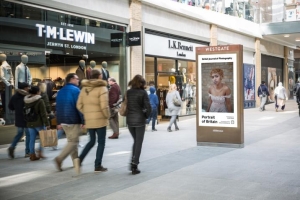
Traditional poster sites are available throughout most shopping centres, positioned in walkways, at entrances and in waiting areas. Six-sheet and four-sheet formats are the most common — they’re a familiar, well-recognised size that works well for bold, simple messages. Static poster sites are generally more affordable than digital screens and offer a more cost-effective entry point into shopping centre advertising.
Entrance and Atrium Advertising
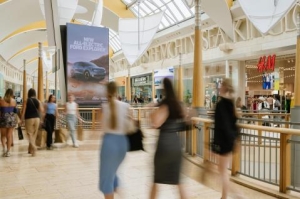
Premium sites at the main entrances and in the central atrium or concourse of a shopping centre are among the most coveted advertising positions in UK retail. Everyone who enters the centre passes through these areas, making entrance and atrium advertising extremely high impact. These sites are also seen from multiple angles and from a distance, maximising the chance of your advert being noticed.
Escalator and Walkway Panels
Panels lining the escalators and main walkways reach shoppers as they move through the centre. These are particularly effective because shoppers on an escalator are in a fixed position, moving slowly, with nothing to look at but what’s around them. Dwell time on an escalator panel is surprisingly long and recall rates for escalator advertising are consistently high.
Experiential and Pop-Up Advertising
For brands wanting maximum impact, many shopping centres offer opportunities for experiential activations — branded areas in the concourse, product demonstrations, sampling stations and interactive installations. These formats are more complex and expensive to produce but can generate extraordinary levels of engagement and brand recall. They’re particularly effective for new product launches, brand reactivations and seasonal campaigns.
Food Court Advertising
The food court is one of the highest dwell time environments in any shopping centre. Diners are seated, relaxed and looking around for extended periods — typically 20 to 30 minutes. Advertising in and around the food court reaches a captive, relaxed audience with genuine time to absorb your message.
Food court advertising delivers some of the longest dwell times of any shopping centre format. A seated, relaxed audience with 20-30 minutes to kill is exactly the kind of captive environment that makes advertising stick.
Which Shopping Centres Offer Advertising in the UK?
Shopping centre advertising is available at retail destinations across the UK, from the largest regional super-centres through to local retail parks. The major players include:
• Westfield London and Westfield Stratford City — among the busiest shopping destinations in Europe
• Trafford Centre, Manchester — one of the UK’s largest out-of-town shopping centres
• Bluewater, Kent — major regional centre serving the South East
• Bullring and Grand Central, Birmingham — prime Midlands retail destination
• Meadowhall, Sheffield — major Northern retail centre
• Metrocentre, Gateshead — the North East’s largest shopping centre
• Lakeside, Essex — major retail destination for East London and Essex
• Arndale centres — major town and city centre retail destinations across the UK
• Retail parks — out-of-town retail destinations with strong advertising availability
Beyond the major destinations, advertising is available at hundreds of smaller shopping centres, retail parks and high street locations across the UK. If you have a specific centre in mind, get in touch and we’ll check what’s available.
How Much Does Shopping Centre Advertising Cost?
Shopping centre advertising costs vary considerably depending on the centre, its footfall, the format and the location within the centre. Premium positions at major destinations like Westfield or the Trafford Centre command significantly higher rates than smaller local centres — but the audience scale justifies the investment. As a general guide, shopping centre advertising sits above bus stop advertising in terms of price, with digital screen packages at major centres representing a more significant investment. Static poster sites at smaller centres can be very affordable and represent excellent value for local and regional campaigns. For accurate pricing for your specific requirements, get in touch and we’ll come back to you with options. Train Station Advertising vs Other OOH Formats
Who Is Shopping Centre Advertising Best For?
Shopping centre advertising works across a wide range of sectors, but it delivers the strongest results for businesses whose target audience overlaps with the shopping centre demographic — broadly, consumers who are active, spending and engaged.
Great fit for shopping centre advertising:
• Retail brands — driving footfall to nearby stores or promoting online shopping
• Food and drink — restaurants, cafes, delivery services, food brands
• Fashion and beauty — particularly effective at fashion-led destinations
• Health and fitness — gyms, wellbeing brands, health food
• Financial services — banking, insurance, mortgages targeting consumers
• Entertainment and leisure — cinemas, bowling, escape rooms, attractions
• Automotive — car dealerships, car finance, accessories
• Property and estate agents — reaching local homeowners and movers
• Education — colleges, universities, training providers targeting local families
• Technology and consumer electronics — reaching tech-savvy shoppers
Consider other formats if:
• Your audience is primarily commuters or professionals — train station advertising may be a better fit
• You need very precise street-level location targeting — bus stop advertising gives you more control
• Your budget is very tight — bus stop and bus advertising offer lower entry points
Shopping centre advertising works best when your creative speaks directly to people in a shopping mindset. A clear offer, a strong visual and a simple call to action — keep it relevant to what people are already thinking about.
Shopping Centre Advertising vs Other OOH Formats
Shopping Centre vs Bus Stop Advertising
Both formats offer good dwell time, but they reach people in different environments. Bus stop advertising reaches people in the community — on the high street, in residential areas, near schools and businesses. Shopping centre advertising reaches people who are already inside a retail environment and in a buying mindset. For businesses with a retail or consumer focus, shopping centres often deliver stronger commercial intent from the audience.
Shopping Centre vs Train Station Advertising
Train station advertising reaches commuters and professionals — typically a higher income, more time-pressured demographic. Shopping centre advertising reaches a broader consumer audience that’s actively in a spending mindset. For B2C brands, shopping centres often deliver a more commercially engaged audience; for professional services and B2B, train stations may be a better fit.
Shopping Centre vs Billboard Advertising
Billboards deliver mass reach on busy roads but the audience is moving quickly. Shopping centre advertising delivers a more engaged audience with significantly more dwell time in a controlled, premium environment. For brand building at scale, billboards win on raw numbers; for depth of engagement and commercial intent, shopping centres have a strong advantage.
How to Book Shopping Centre Advertising in the UK
Shopping centre advertising is managed by specialist contractors who hold the media rights at each centre or group of centres. The main players include JCDecaux, Global, Primesight and the centres’ own in-house teams. Rather than approaching each one separately, working with Focus Media Outdoor gives you access to the full range of available inventory, independent advice on which centres and formats offer the best value for your campaign, and competitive rates across all the major operators. For a full guide to planning your campaign, take a look at our post on how to plan an outdoor advertising campaign.
Ready to Explore Shopping Centre Advertising?
Get in touch with the Focus Media Outdoor team. We’ll identify the right centres and formats for your campaign, provide honest pricing and handle everything from booking to artwork production. Contact us today for a free no-obligation conversation.