A straight-talking guide from Focus Media Outdoor — over 20 years in the industry
Bus stop advertising — also known as bus shelter advertising, six sheet advertising or Adshel advertising — is one of the most flexible, affordable and consistently effective forms of outdoor advertising available in the UK. Moreover, it’s the format that gives you something most others can’t — the ability to pick an exact location. Right outside a competitor. Near a specific school. On a particular high street. In this guide, we cover everything you need to know about bus stop advertising — what it costs, what formats are available, how to find sites near you and what makes a great bus stop advert. Furthermore, for pricing specifically, take a look at our dedicated bus stop advertising cost guide. Or get straight to it — visit our bus stop advertising page and get a free quote today.
What Is Bus Stop Advertising?
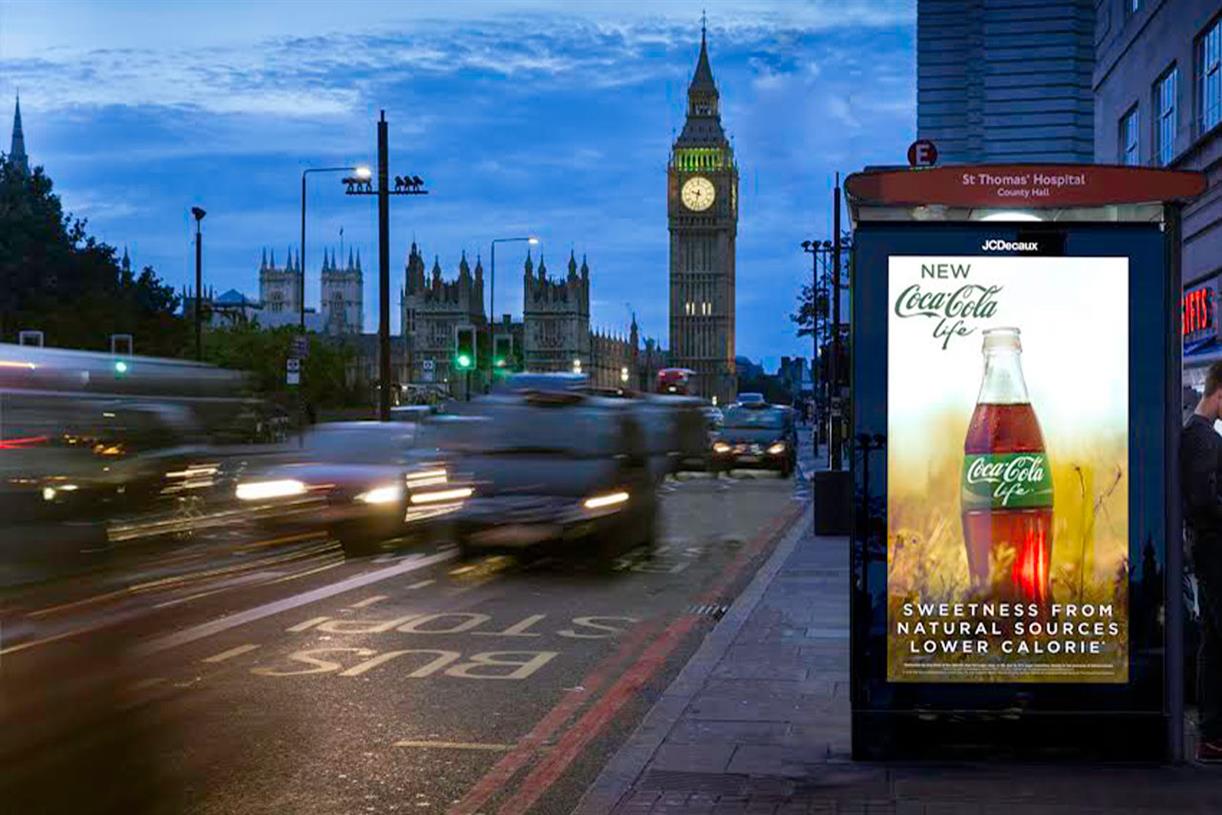
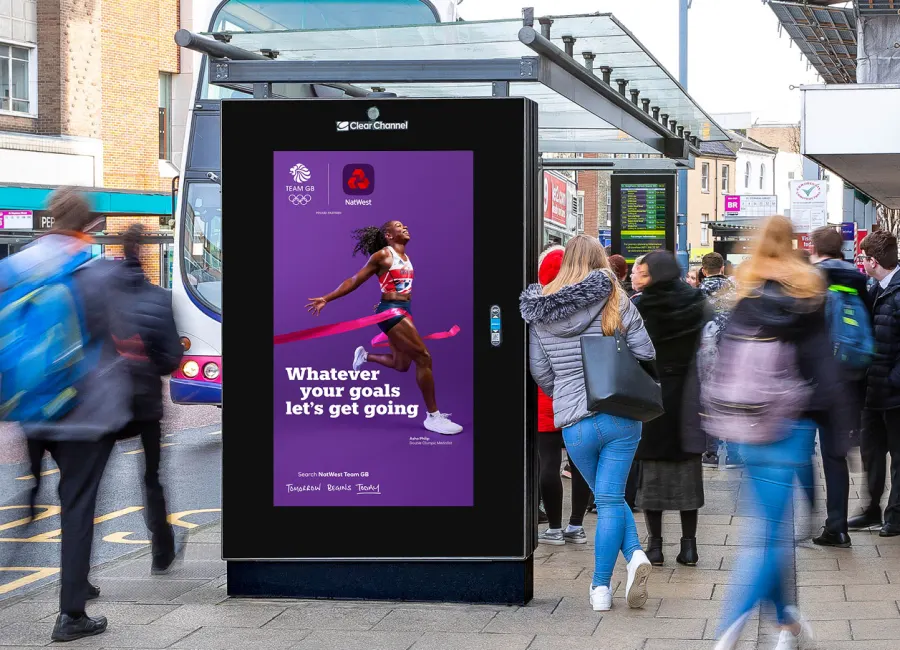
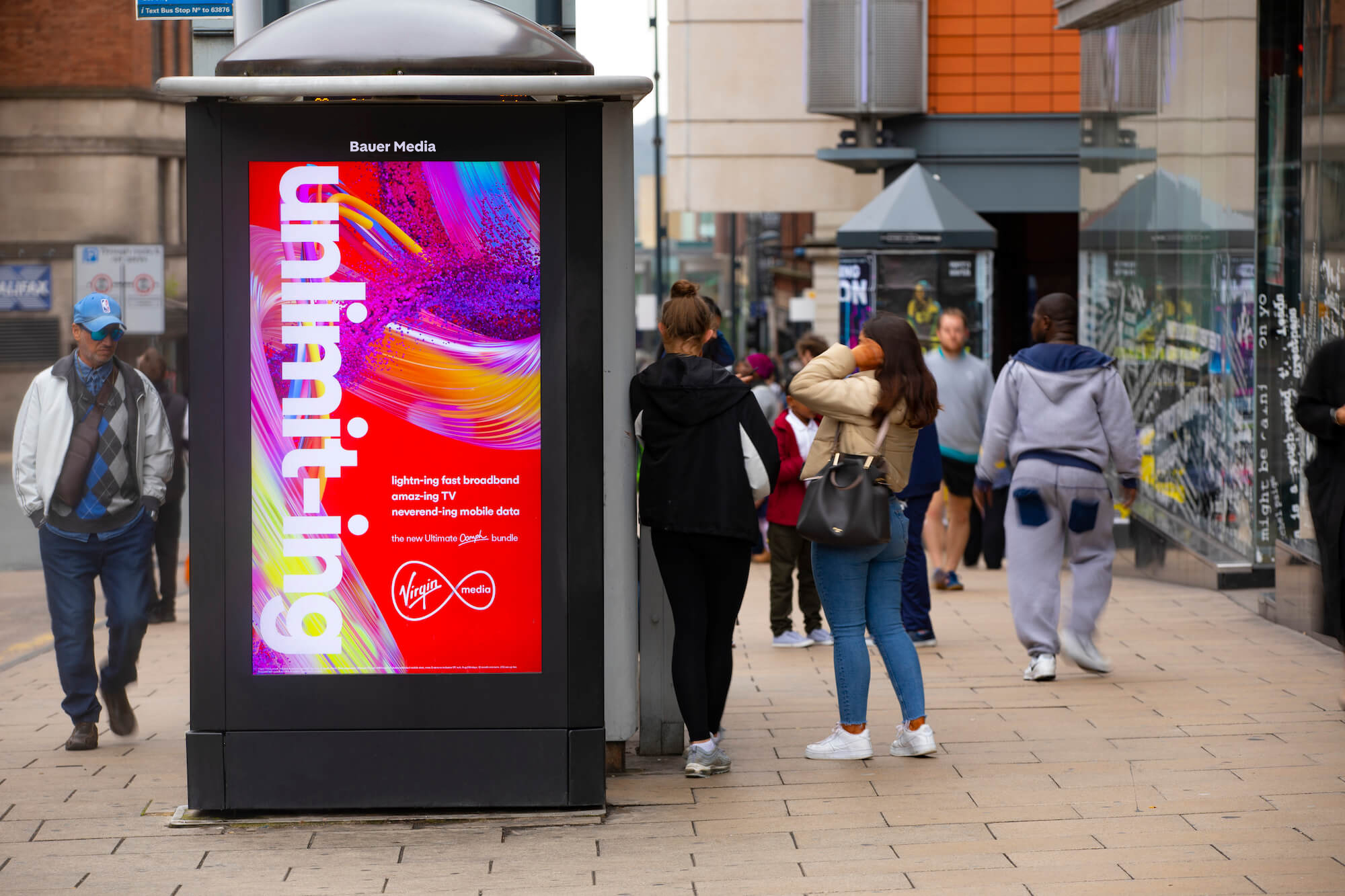
Bus stop advertising is a poster or digital screen displayed within or on a bus shelter, positioned at street level where pedestrians, waiting passengers and passing traffic can all see it. Furthermore, the standard format is a six sheet, six foot wide by four foot tall. This is why bus stop advertising is also referred to as six sheet advertising or Adshel advertising, after the Clear Channel shelter network.
However, bus stop advertising isn’t limited to bus stops. Moreover, the same six sheet format is found at train stations, shopping centres, retail parks and airports. As a result, when most people talk about bus stop advertising they mean the classic shelter-based six sheet poster — static or digital — positioned at street level in high footfall locations across towns and cities.
Bus stop ads benefit from something that most other outdoor formats don’t have — dwell time. People waiting for a bus aren’t rushing past. Consequently, they have time to read and absorb your message in a way that drivers passing a billboard or pedestrians walking past a poster simply don’t.
Bus stop advertising is also called bus shelter advertising, six sheet advertising, Adshel advertising and shelter advertising. Furthermore, the digital version is known as DOOH (Digital Out of Home) or digital six sheet advertising. All these terms refer to the same format.
Bus Stop Advertising Costs — At a Glance
| Format | Cost (2 weeks) | Print Included? | Best For |
| Static 6 Sheet | £275 – £395 | Yes — all in | Brand awareness, local targeting |
| Digital 6 Sheet (Share of Time) | Variable by network | No print needed | Flexible campaigns |
| Digital 6 Sheet (Adshel Live Plays) | ~5p per play | No print needed | Budget-controlled campaigns |
| Bus Stop Bench Ad | Varies by location | Confirm with agency | Low budget, local presence |
*Guide prices only. Actual costs vary by supplier, location and volume. All Focus Media Outdoor prices include print as standard.
For a full breakdown of what’s included in the price and how digital bus stop advertising is priced differently to static, take a look at our detailed bus stop advertising cost guide. Additionally, to compare bus stop costs against other OOH formats, our outdoor advertising costs guide covers every major format in one place.
At £275 for two weeks, bus stop advertising works out at under £20 per day for a six-foot advert in a busy public location. Furthermore, unlike most advertising formats, bus stop adverts often stay up a little longer than you’ve paid for — because suppliers won’t remove a poster until they have a replacement ready.
Static vs Digital Bus Stop Advertising — What’s the Difference?
Static Six Sheet Bus Stop Advertising
Well static bus stop advertising is a printed vinyl poster displayed in a bus shelter frame. Moreover, it’s the most widely available and most affordable format — found at bus stops across most major UK towns and cities. Furthermore, static sites give you exclusive use of that advertising space for the full two-week period. As a result, your advert is visible 24 hours a day, seven days a week, for the entire campaign duration.
Digital Bus Stop Advertising — Adshel Live and DOOH
Digital bus stop advertising displays your advert on an LED screen within the shelter, rotating alongside other advertisers. Furthermore, there are two main buying models for digital bus stop advertising in the UK:
- Share of time — your advert rotates on the screen alongside other advertisers, typically every 60 to 90 seconds. You buy a share of the screen’s time over the campaign period
- Individual plays — Clear Channel’s Adshel Live network offers a plays-based model where you buy a set number of individual ad plays at approximately 5p per play. As a result, £500 gets you around 2,500 plays and £1,000 gets you around 5,000
Moreover, digital bus stop advertising allows you to change your creative quickly — ideal for time-sensitive promotions and campaigns that need to react to events or seasons. However, unlike static advertising, digital sites are shared with other advertisers, so you don’t have exclusive ownership of the space.
Clear Channel’s Adshel Live network is the UK’s largest digital bus stop network. Furthermore, the plays-based buying model gives you complete control over your budget — you know exactly how many times your advert will be shown before you commit a single pound.
How to Find Bus Stop Advertising Near You
Finding available bus stop sites near you is straightforward. However, the first thing to know is that bus stop advertising isn’t available everywhere — many local authorities restrict six sheet advertising in their area. That said, most major towns and cities have good availability. For a full guide to finding sites in your area, take a look at our bus stop advertising near me guide. Here’s a quick summary of your options:
Option 1 — Use Adplan
Adplan (ad-plan.co.uk) is a free site finder platform that lets you search for available outdoor advertising sites by postcode. Moreover, you can set a search radius of one to five kilometres and it shows you every available bus stop site in that area, complete with impact figures and supplier details. Furthermore, it covers all three major suppliers — Clear Channel, Global and JCDecaux — so you get a complete picture of what’s available.
Option 2 — Go Direct to the Suppliers
The three main bus stop advertising suppliers in the UK are Clear Channel, Global and JCDecaux. However, going direct typically means paying rate card prices without negotiation. Furthermore, each supplier only shows you their own inventory, so you don’t get a complete picture of everything available in your area.
Option 3 — Use Focus Media Outdoor
The simplest option — come to us. At Focus Media Outdoor, we work across all three major suppliers and can search the full inventory of available sites in your area. Moreover, we negotiate rates on your behalf and handle everything from booking to print production. Get in touch with your postcode and we’ll come back to you with the best available sites, impact figures and all-in pricing — usually within 24 hours.
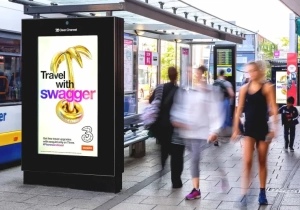
Bus Stop Advertising in London
London bus stop advertising is one of the most popular formats we book — and it’s more affordable than most people expect. Standard six sheet sites in London are priced similarly to the rest of the UK, making London bus shelter advertising exceptional value given the volume of people passing every day.
Furthermore, Clear Channel’s Adshel Live digital network has a particularly strong presence across London, offering both static and digital bus stop sites throughout all major boroughs. Moreover, the digital plays model works especially well for London campaigns — at approximately 5p per play, you get maximum flexibility to concentrate your budget on the boroughs that matter most for your business.
Additionally, London bus stop advertising lets you target specific areas with precision — Canary Wharf for financial services, Oxford Street for retail, Shoreditch for tech brands. As a result, it’s one of the most targeted and cost-effective ways to reach a London audience at street level.
Bus stop advertising in London is priced similarly to the rest of the UK — you’re not paying a London premium for standard six sheet sites. Moreover, given the volume of people passing each site daily in London, the cost per thousand people reached is exceptionally competitive.
How Effective Is Bus Stop Advertising?
Bus stop advertising is consistently one of the most popular OOH formats we sell. Moreover, the repeat booking rate is very high — businesses come back to it year after year because it works. Furthermore, the format offers something most others can’t — precise geographic targeting combined with genuine dwell time.
However, not all bus stop sites are equal. A site on a busy high street will generate far more impressions over two weeks than one in a quieter residential area. As a result, always ask for the OTS (Opportunity To See) figure before booking — this tells you how many people are expected to see your advert over the campaign period. Moreover, impact data is available for every site through suppliers and platforms like Adplan, so there’s no excuse for booking blind.
Furthermore, research consistently shows that OOH advertising drives online search uplift. In other words, people who see your bus stop advert are more likely to search for your business online. As a result, bus stop advertising and digital advertising work best together rather than as alternatives. For a full comparison, take a look at our post on OOH advertising vs digital advertising.
What Makes a Great Bus Stop Advert?
Because bus stop advertising is at street level and seen by people on the move, your creative needs to work fast. However, compared to a motorway billboard, bus stop adverts do benefit from more dwell time — people waiting for a bus have a few minutes to read and absorb your message. Moreover, the close-up viewing distance means you can include slightly more detail than a roadside billboard.
That said, the golden rules still apply:
- Keep the headline to six words or fewer — clarity beats cleverness every time
- Use bold, high-contrast visuals — visible from a distance and at street level
- Make your brand name or logo immediately obvious
- Include one clear call to action — a URL, phone number or location
- Avoid small text or complex layouts — if it takes more than two seconds to read, it’s too much
- Use large, simple fonts — nothing decorative or hard to read quickly
- Ensure important content is within the safe zone — at least 50mm inside the trim edge
Furthermore, for digital bus stop adverts, keep animations simple — your advert will play for 5-10 seconds per loop, so the key message needs to land immediately. If you need help with your artwork, our design and print team produce six sheet artwork every week and know every supplier’s specifications inside out.
The two second rule — if someone can’t read and understand your bus stop advert in two seconds, it needs simplifying. That’s the rule of thumb we use every time, and it applies whether the site is static or digital.
Bus Stop Advertising vs Other OOH Formats
Bus Stop vs Bus Advertising
The key difference is location control. Bus stop advertising lets you pin your message to a specific fixed location. Bus advertising, however, covers a broader area as the bus travels its routes. Furthermore, with bus stop advertising you can pick an exact site — outside a competitor, near a school, on a specific high street. As a result, bus stops are better for precise local targeting and buses are better for broad area coverage. Moreover, the two work brilliantly together as part of a combined campaign.
Bus Stop vs Billboard Advertising
Billboard advertising is larger and positioned on roadsides rather than at street level. Furthermore, billboards reach a driving audience at speed with seconds of exposure, while bus stops reach pedestrians and waiting passengers with more dwell time. As a result, bus stops are better for detailed messages and local community targeting, while billboards are better for bold brand awareness at scale. However, the two formats complement each other well in a combined campaign.
Bus Stop vs Train Station Advertising
Both formats offer street level or platform level visibility with good dwell time. However, train station advertising typically reaches a more defined commuter and professional demographic, while bus stop advertising reaches a broader cross-section of the local community. Furthermore, bus stop advertising is generally more affordable than train station advertising for comparable formats. As a result, bus stops are better for broad local campaigns, while train stations are better for targeting a commuter or professional audience.
How to Book Bus Stop Advertising — Step by Step
Booking bus stop advertising is straightforward when you work with an experienced agency. Furthermore, here’s how the process works at Focus Media Outdoor. For a broader guide to planning your entire outdoor campaign, take a look at our step-by-step campaign planning guide.
- Tell us your target area, budget and campaign objective — call us, email us or fill in the contact form
- We search all available sites in your area across Clear Channel, Global and JCDecaux
- We send you a shortlist of recommended sites with impact figures and all-in pricing
- You choose your sites — we handle the booking, negotiate the rates and confirm availability
- You send us your artwork, or our design team produces it to the correct specifications
- Your campaign goes live on the agreed start date — we confirm posting and send you proof photos
Frequently Asked Questions About Bus Stop Advertising
What is bus stop advertising?
Bus stop advertising is a six foot by four foot poster or digital screen — known as a six sheet — displayed within a bus shelter. It’s visible to pedestrians, waiting passengers and passing traffic 24 hours a day. Also referred to as bus shelter advertising, Adshel advertising or six sheet advertising.
How much does bus stop advertising cost in the UK?
A static six sheet bus stop advert costs between £275 and £395 for a two-week campaign, all in — including the printed poster. Digital bus stop advertising on Clear Channel’s Adshel Live network is priced at approximately 5p per play. For a full breakdown, see our bus stop advertising cost guide.
How much is bus stop advertising in London?
London bus stop advertising is priced similarly to the rest of the UK for standard static sites — between £275 and £395 for two weeks all in. The rate is consistent nationally. Digital bus stop advertising in London is available through Clear Channel Adshel Live on a plays or share of time basis.
How long does a bus stop advertising campaign run?
All bus stop advertising runs in two-week cycles. Most campaigns run for two weeks in one set of locations, then move to a fresh set of sites for maximum coverage. Bus stop adverts often stay up slightly longer than the booked period — because suppliers won’t remove a poster until they have a replacement ready.
Where can I find bus stop advertising near me?
Use Adplan (ad-plan.co.uk) to search by postcode and see every available site within a set radius — completely free. Alternatively, get in touch with Focus Media Outdoor and we’ll search all three major suppliers and find the best available sites in your area, complete with impact figures and all-in pricing.
Is bus stop advertising available everywhere in the UK?
Not everywhere — many local councils restrict six sheet advertising within their boundaries. However, most major towns and cities have good availability across Clear Channel, Global and JCDecaux networks. Get in touch with your postcode and we’ll check immediately.
What size is a bus stop advert?
Bus stop adverts are six foot wide by four foot tall — 1200mm x 1800mm in metric. This is the standard six sheet format, consistent across all suppliers and environments including bus stops, train stations and shopping centres.
What is the difference between static and digital bus stop advertising?
A static bus stop advert is a printed poster that stays in place exclusively for the full two-week period. A digital bus stop advert appears on an LED screen and rotates alongside other advertisers. Digital offers more creative flexibility and can be updated instantly. Static offers exclusive ownership of the site and around-the-clock visibility.
How effective is bus stop advertising?
Very effective for local businesses. You can cherry pick exact locations, and sites in busy town centres can generate thousands of impressions per day. Bus stop advertising is one of the most consistently popular OOH formats we sell — repeat bookings are very common, which tells you everything about the results it delivers.
What is Adshel advertising?
Adshel is Clear Channel’s bus shelter advertising network — one of the largest outdoor advertising networks in the UK. Adshel advertising refers to both static six sheet posters and digital screens (Adshel Live) within Clear Channel’s bus shelter network. The term is sometimes used interchangeably with bus stop or bus shelter advertising.
Who provides bus stop advertising in the UK?
The three main suppliers are Clear Channel (Adshel and Adshel Live), Global and JCDecaux. Focus Media Outdoor works across all three and can search the complete inventory of available sites in your area — giving you a better picture of availability and better rates than going to any single supplier directly.
How do I get the best bus stop advertising rates?
Work with an agency like Focus Media Outdoor. We have pre-negotiated rates with all the major suppliers that aren’t available to direct bookers. Furthermore, we can compare across all three suppliers to find you the best value sites for your target area and budget.
Ready to Book Bus Stop Advertising?
Get in touch with the Focus Media Outdoor team. Give us your postcode and target area and we’ll come back to you with the best available sites, impact figures and an all-in price including print — usually within 24 hours. No obligation, no hard sell. Contact us today for a free quote.