A straight-talking guide from Focus Media Outdoor — over 20 years in the industry
Train station advertising is one of the most effective and consistently underrated forms of outdoor advertising available in the UK. It puts your brand in front of a captive, engaged audience — commuters, shoppers and travellers who have time to stop, look and actually take in your message. In a world where most advertising is designed to be skipped, train station advertising is there on the platform, in the concourse and at the ticket hall, impossible to ignore and impossible to scroll past. In this guide, we cover everything you need to know — what formats are available, which stations offer advertising, what it costs and who it works best for. If you’d like to explore options for your business, our campaign planning team are ready to help.
Why Train Station Advertising Works
The key word with train station advertising is dwell time. Unlike a billboard that a driver passes in a fraction of a second, or a bus stop advert that a pedestrian glances at as they walk past, train station audiences have time. They’re waiting for a train — and waiting means looking around.
The average commuter spends several minutes on a platform before their train arrives. In a busy concourse or ticket hall, people are moving through but at a pace that allows them to take in their surroundings. That level of engaged, sustained exposure is incredibly valuable for advertisers — and it’s the defining advantage of train station advertising over most other OOH formats.
Add to this the demographic profile of train station audiences — typically commuters, professionals and regular travellers who index above average for income and spending power — and you have a format that delivers both quality and quantity of audience.
Commuters waiting on a platform have an average dwell time of 5-8 minutes. That’s 5-8 minutes of your brand being in front of an engaged, captive audience — more than enough time for your message to land.
What Formats Are Available at Train Stations?
Train station advertising comes in a variety of formats depending on the station, its size and who holds the media contract. Here’s a rundown of the main options:
Platform Posters and Banners
The classic train station format — large format poster sites positioned along platforms where waiting passengers have nothing to do but look around. These are typically four-sheet or six-sheet format and are ideal for bold, simple messages that benefit from extended viewing time. Platform posters are available at stations of all sizes, from major city termini through to smaller commuter stations.
Concourse and Ticket Hall Advertising
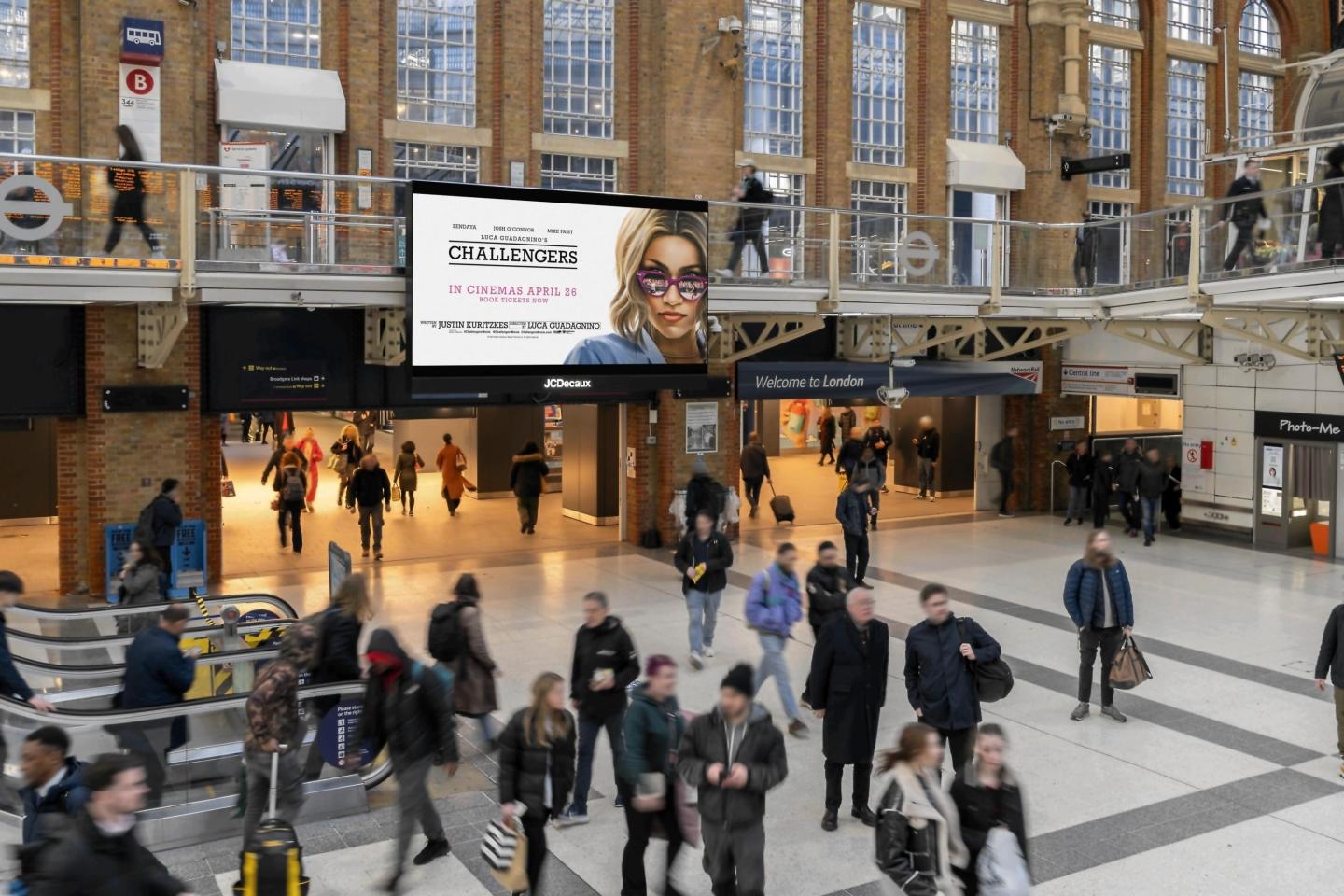
Large format advertising in the main concourse or ticket hall reaches passengers as they arrive, depart or pass through the station. These sites benefit from high footfall and visibility from multiple angles. At major stations, concourse advertising can be extremely high impact — some of the largest and most prestigious poster sites in the UK are located in major rail terminals.
Digital Screens
Digital advertising screens are increasingly common at UK train stations, particularly at larger stations and those operated by Network Rail. The digital screens allow for dynamic creative — your advert rotates alongside other advertisers on a share of time basis, and you can update your creative quickly and easily. They’re particularly effective in high footfall areas like concourses and ticket halls.
Six Sheet Poster Sites
Six-sheet poster sites — the same format as bus stop advertising — are available at many train stations, positioned in waiting areas, at the entrance and along passenger walkways. At six foot by four foot, they’re a familiar and well-recognised format that works well for local and regional campaigns.
Escalator and Walkway Panels
At larger stations, advertising panels line the escalators and walkways that passengers use to move through the station. These are particularly effective because passengers are moving slowly, in a fixed direction with nothing to look at but the panels around them — a genuinely captive environment.
Platform posters consistently deliver some of the highest recall rates of any outdoor advertising format. Waiting passengers have nothing to do but look at what’s around them — and they remember what they see.
Which Train Stations Offer Advertising in the UK?
Train station advertising is available at stations across the UK, managed by a combination of Network Rail, Transport for London and the individual train operating companies. The main station groups for advertising purposes are:
Network Rail Stations
Network Rail manages the UK’s largest and busiest stations, including London Euston, London Paddington, London Victoria, London Waterloo, London Bridge, Manchester Piccadilly, Birmingham New Street, Edinburgh Waverley, Glasgow Central and Leeds. These stations attract some of the highest footfall of any locations in the UK and offer a wide range of premium advertising formats.
Transport for London Stations
TfL manages London Overground and Elizabeth line stations across the capital. These stations serve a broad London demographic and are particularly effective for campaigns targeting London audiences. TfL station advertising sits alongside the London Underground network, which is covered separately.
Regional and Commuter Stations
Beyond the major termini, advertising is available at hundreds of smaller commuter and regional stations across the UK. These offer more affordable entry points into train station advertising and are ideal for businesses wanting to reach a local commuter audience without the premium pricing of the major hubs.
How Much Does Train Station Advertising Cost?
Train station advertising costs vary considerably depending on the station, the format and the location within the station. Major terminal stations like Waterloo, Paddington and Manchester Piccadilly command premium rates reflecting their extraordinary footfall — these are among the most expensive OOH sites in the UK. Smaller commuter stations are significantly more affordable and can represent excellent value for regional campaigns. As a general guide, train station advertising sits above bus stop advertising and comparable to billboard advertising in terms of price, though premium sites at major terminals will be considerably higher. For accurate pricing for your specific station and format requirements, get in touch and we’ll come back to you with availability and rates.
Who Is Train Station Advertising Best For?
Train station advertising works particularly well for businesses targeting a commuter or professional demographic. Here’s a guide to who gets the best results:
Great fit for train station advertising:
• Financial services — banks, investment firms, insurance, mortgage brokers
• Professional services — law firms, accountants, recruitment agencies
• Education — universities, business schools, professional qualifications
• Technology and SaaS — business software, apps, productivity tools
• Retail and fashion — particularly at stations with strong retail environments
• Food and drink — coffee shops, restaurants, delivery services targeting commuters
• Property and estate agents — commuter belt areas particularly effective
• Health and wellbeing — gyms, healthcare, mental health services
• Travel and hospitality — airlines, hotels, holiday companies
• Automotive — reaching professional drivers and company car users
Consider other formats if:
• Your audience is very local and unlikely to use the train regularly
• You need very precise geographic targeting — bus stop advertising gives you more location control
• Your budget is very limited — smaller formats like bus stop advertising offer a more affordable entry point
Train station advertising consistently over-indexes for professional and higher income audiences. If your product or service targets working professionals, it’s one of the most targeted formats available.
Train Station Advertising vs Other OOH Formats
Train Station vs Bus Stop Advertising
Both formats offer dwell time that roadside billboards can’t match — but they reach different audiences in different environments. Bus stop advertising is more flexible on location, more affordable and reaches a broader demographic. Train station advertising reaches a more defined commuter and professional audience with higher average income. For many campaigns, a combination of both works well.
Train Station vs Billboard Advertising
Billboards offer mass reach on busy roads but the audience is moving quickly. Train station advertising delivers a more engaged, stationary audience with significantly more dwell time. Billboards win on raw reach; train stations win on depth of engagement.
Train Station vs Bus Advertising
Bus advertising travels through an area, reaching a broad geographic audience. Train station advertising is fixed to a specific location, reaching the defined audience that uses that station. Bus advertising for broad coverage, train station advertising for a specific, high-value audience..
How to Book Train Station Advertising in the UK?
Train station advertising is managed by specialist contractors who hold the media rights at each station or group of stations. The main players include JCDecaux, Global and Primesight, each holding contracts at different stations and networks. Rather than approaching each contractor separately, working with an agency like Focus Media Outdoor means you get independent advice, access to the full range of available inventory and competitive rates across all the major station groups.
For more on how to approach planning your outdoor advertising campaign, take a look at our guide to how to plan an outdoor advertising campaign or read about the benefits of outdoor advertising for a broader overview of what OOH can do for your business.
Ready to Explore Train Station Advertising?
Get in touch with the Focus Media Outdoor team. We’ll identify the right stations and formats for your campaign, provide honest pricing and handle everything from booking to artwork production. Contact us today for a free no-obligation conversation.