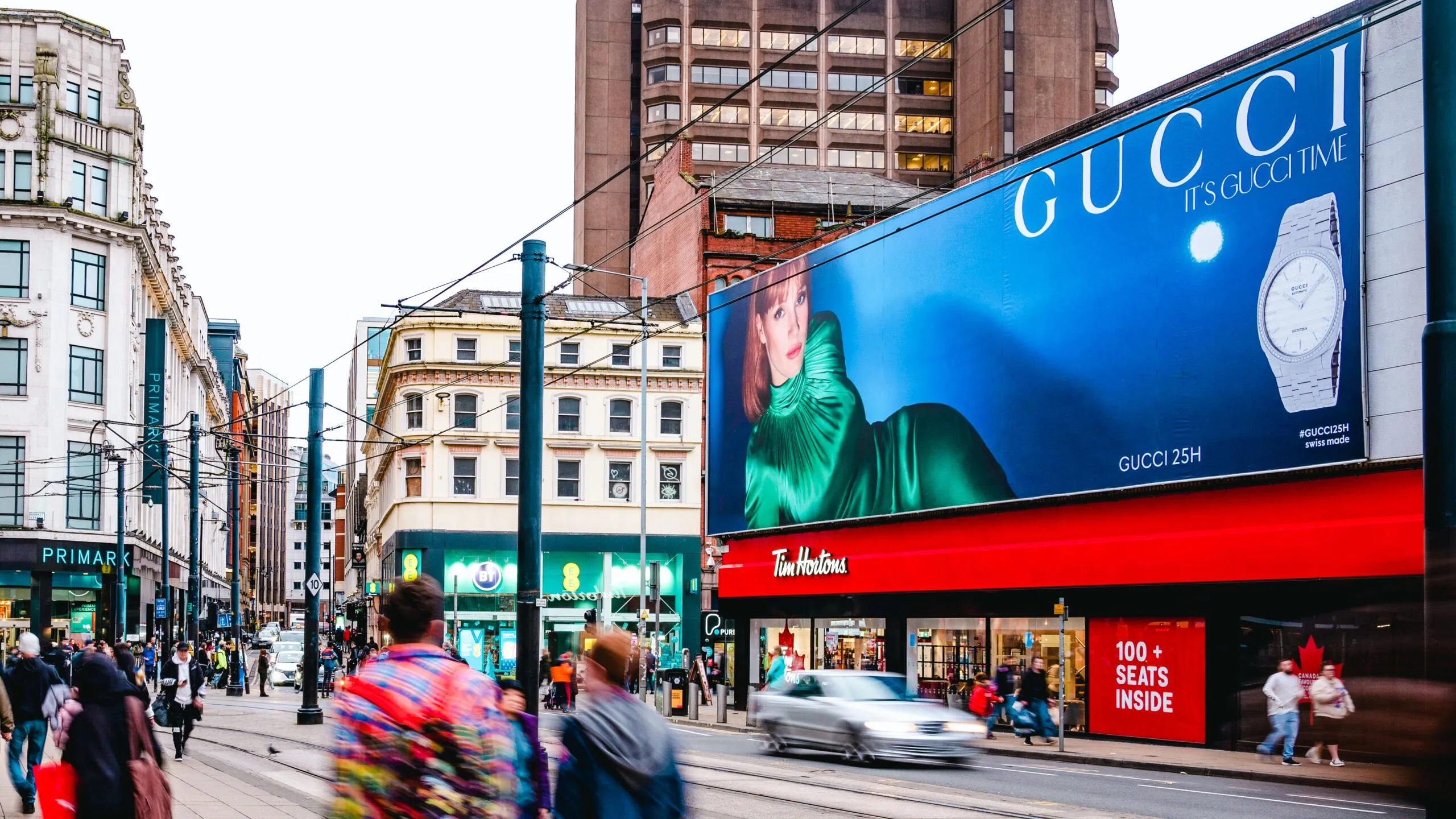
Straight-talking campaign planning advice from Focus Media Outdoor — over 20 years in the industry
Planning an outdoor advertising campaign for the first time can feel a bit daunting. There are formats to choose from, locations to consider, budgets to work out and artwork to produce — and it all needs to come together at the right time. The good news is that it doesn’t have to be complicated. In this guide, we walk you through the whole process step by step, from setting your objectives all the way through to getting your campaign live. If you’d like help putting a campaign together, our campaign planning team are here to do the heavy lifting for you.
Step 1: Set Your Objectives
Before you book a single site or think about creative, you need to be clear on what you want your campaign to achieve. This is the most important step and the one most people skip — and it’s the reason many campaigns underperform.
Ask yourself: what does success look like? Is it more footfall to a physical location? More calls and enquiries? Building brand awareness in a new area? Launching a new product or service? Each objective leads to a different campaign approach, so get this right before you do anything else.
Be as specific as you can. “Get more customers” is not an objective. “Increase enquiries by 20% over the next 6 weeks in the Manchester area” is an objective you can actually plan around and measure.
Set your objective before you think about format, location or budget. Everything else flows from knowing exactly what you’re trying to achieve.
Step 2: Set Your Budget
Once you know what you’re trying to achieve, you need to work out what you have to spend. Outdoor advertising works at almost any budget — from a few hundred pounds for a local bus stop campaign to tens of thousands for a multi-format national push. The key is being realistic about what your budget can deliver and allocating it in the right places.
As a rough guide:
• £300–£500 — a handful of bus stop sites in a local area for two weeks
• £500–£1,000 — a small bus advertising campaign or a mix of bus stops and bus rears
• £1,000–£3,000 — a meaningful local campaign across multiple formats
• £3,000+ — a broader campaign covering multiple areas or premium formats
Don’t spread your budget too thin. It’s far better to do one or two formats properly than to dilute across five formats with too little spend in each.
A focused campaign with a clear message in a specific area will always outperform a scattered campaign with the same budget spread too thinly.
Step 3: Choose Your Format
There are plenty of outdoor advertising formats to choose from and the right one depends on your objective, your budget and your target audience. Here’s a quick overview of the main options — and for detailed cost information on specific formats, take a look at our guide to billboard advertising costs or our bus stop advertising Q&A.
Billboards — 48 Sheet and 96 Sheet
Big, bold and impossible to ignore. Billboard advertising is ideal for building broad awareness across a town or city. A 48 sheet is the standard format — 20 feet wide by 10 feet tall. A 96 sheet is double the length and makes an even bigger statement on major roads and motorway approaches.
Bus Stop Advertising — 6 Sheet
One of the most flexible formats available. Bus stop advertising lets you cherry pick exact locations — right outside a competitor, near a key venue, on a busy high street. At six foot by four foot, a bus stop advert is big enough to make an impact and static enough for people to actually read it.
Bus Advertising
A moving format that takes your message through residential streets, town centres and high streets. Bus advertising covers a broad area and is great value — but you select by depot and area rather than specific routes, so it works best for campaigns targeting a general geographic area rather than a precise location.
Train Station Advertising
Great for reaching commuters and a slightly more affluent demographic. Train station advertising puts your message in front of people who have genuine dwell time — they’re waiting for a train and they’re looking around. Ideal for financial services, recruitment, education and premium brands.
Shopping Centre Advertising
If your audience shops in specific retail destinations, shopping centre advertising puts your message right in front of them at the moment they’re in a buying mindset. Great for retail, food and beverage, and local services.
Step 4: Select Your Locations
Location selection can make or break an outdoor advertising campaign. The best creative in the world won’t deliver results if it’s in the wrong place. Here’s what to think about when choosing sites:
For billboard and bus stop advertising, you can be very specific about location — right down to an individual street or junction. Use this to your advantage. Think about where your target audience actually is. Where do they live, work, shop and travel? Put your advertising where they already spend their time.
For bus advertising, you’re selecting depots and areas rather than specific routes. Think about which parts of town your target customers come from and choose depots that cover those areas.
Always ask for impact data — the number of people likely to see your advert at each site over the campaign period. Platforms like Adplan (adplan.co.uk) are excellent for comparing sites and their audience figures before you commit.
Higher impact sites don’t always cost much more than lower impact ones — always check the figures and go for the best value audience you can find.
Step 5: Sort Your Creative
Your creative — the artwork on your advert — is what people actually see. It needs to work hard and work fast. Whether it’s a billboard, a bus stop or a bus side, people will have seconds to take in your message. Here’s the golden rule: keep it simple. One headline, one image, one call to action. If you’re trying to say three things, you’re saying nothing. For detailed advice on what makes outdoor advertising creative work, our design and print team have been producing OOH artwork for over 20 years and will make sure your creative is built to spec and ready to go.
The key things to get right:
• Bold, high-contrast visuals — it needs to be visible from a distance
• Minimal text — if it takes more than two seconds to read, it’s too much
• Clear branding — your name or logo needs to be instantly recognisable
• One call to action — a website URL, a phone number or a location
• Correct file specifications — every format has specific size requirements
Step 6: Book Your Campaign
Once you have your objective, budget, format, locations and creative sorted, you’re ready to book. You can go directly to suppliers like Clear Channel, Global or JC Decaux, but this typically means paying rate card prices. Working with an agency like Focus Media Outdoor means you get access to better rates, independent advice on which sites offer the best value and a team that handles the whole process from booking to print.
All outdoor advertising runs in two-week cycles, so plan your campaign dates around that. If you’re promoting a specific event or deadline, work backwards — your campaign should be live at least four weeks before the date you’re promoting, ideally six to eight weeks for maximum impact.
Always book your campaign at least 4-6 weeks before your key date. Last minute bookings limit your site choices and you’ll often end up with second-best locations.
Step 7: Measure Your Results
Once your campaign is live, track what’s happening. Set up a dedicated landing page or phone number, monitor your Google Analytics for traffic uplifts from your target area and watch your branded search volume in Google Search Console. For a full guide on how to measure OOH advertising ROI, take a look at our post on how to measure ROI from OOH advertising.
The key is to have your measurement approach set up before the campaign goes live, not after. Decide what you’re going to track, record your baseline figures and then compare during and after the campaign.
Ready to Start Planning Your Campaign?
The team at Focus Media Outdoor will handle every step of the process for you — from format selection and site finding through to print production and booking. We’ve been planning and booking outdoor advertising campaigns for over 20 years and we’ll make sure every pound of your budget is working as hard as possible. Get in touch today for a free no-obligation conversation.