A straight-talking guide from Focus Media Outdoor — over 20 years in the industry
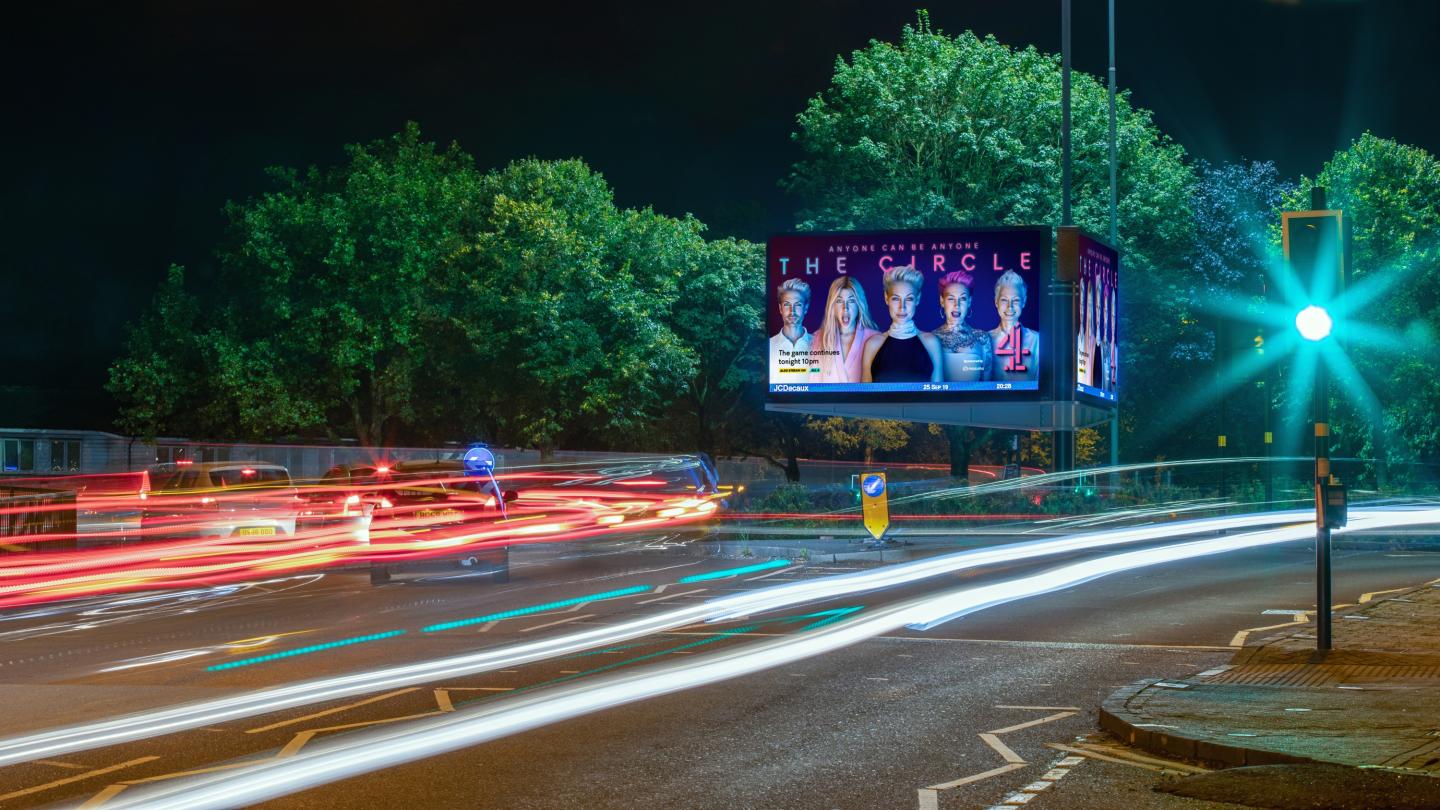
Motorway billboard advertising is one of the most powerful and high-impact forms of outdoor advertising available in the UK. Every day, millions of drivers travel the UK’s motorway network — and the billboards alongside those roads put your brand message in front of a massive, captive audience at exactly the moment they have nowhere else to look. Moreover, motorway advertising signs are visible from considerable distances, giving your brand extended exposure as drivers approach. In this guide, we cover everything you need to know about advertising on motorway billboards — formats, costs, locations, what makes them effective and how to book. If you’d like to explore a campaign, our campaign planning team are here to help.
Why Motorway Billboard Advertising Works
Motorway billboard advertising works because of the sheer volume of traffic that passes through the UK’s motorway network every single day. Furthermore, drivers on a motorway have limited visual stimulation — unlike town centres or high streets, there are no shop windows, no pedestrians and no competing distractions. As a result, a well-placed motorway billboard commands attention in a way that urban formats simply can’t match.
In addition, motorway journeys tend to be longer than local trips. Drivers and passengers spend extended periods on the motorway, often passing the same billboard multiple times over the course of a week if it’s on their regular commute or business route. Consequently, a motorway billboard campaign delivers repeated exposure to the same audience over the full duration of the booking.
However, what really sets motorway billboard advertising apart is the audience profile. Motorway users are disproportionately likely to be business travellers, company car drivers, delivery professionals and commuters — all commercially valuable demographics with above-average spending power and purchasing authority.
A motorway billboard on a busy route can be seen by hundreds of thousands of drivers per week. Moreover, drivers approaching from a distance have several seconds — sometimes over a minute — to take in your message as they travel towards the site.
Motorway Billboard Advertising Formats
48 Sheet Motorway Billboards
The standard motorway billboard format is the 48 sheet — 20 feet wide by 10 feet tall. These are the most widely available motorway advertising signs across the UK network and represent the best value entry point into motorway billboard advertising. Furthermore, 48 sheet motorway billboards are available alongside all major UK motorways, including the M1, M6, M25, M4, M40 and M62. For detailed pricing, take a look at our billboard advertising cost guide.
96 Sheet Motorway Billboards
For maximum impact on the motorway, a 96 sheet billboard — at 40 feet wide by 10 feet tall — is the premium option. These are the biggest standard outdoor advertising format available in the UK and are genuinely impossible to miss at motorway speed. Additionally, many 96 sheet motorway sites are illuminated, making them visible in the early morning, evening and throughout the winter months when daylight is limited.
Digital Motorway Billboards
Digital motorway billboards are an increasingly popular option across the UK’s major routes. Rather than a static printed poster, your advert appears on a large LED screen and rotates alongside other advertisers. Moreover, digital motorway boards allow you to change your creative quickly — ideal for campaigns that need to respond to events, seasons or time-sensitive promotions. Furthermore, some digital motorway networks allow dayparting — running your advert at specific times of day to target morning commuters, evening rush hour traffic or weekend leisure drivers.
Digital motorway billboards can be updated remotely and almost instantly. As a result, they’re ideal for campaigns that need flexibility — seasonal promotions, event advertising or time-sensitive messages.
Where Are Motorway Billboards Located in the UK?
Motorway billboard advertising is available alongside all major UK motorway routes. Some of the most popular and high-traffic locations include:
• M25 — the UK’s busiest motorway, circling London with enormous daily traffic volumes
• M6 — runs from the West Midlands to the Scottish border, passing through major population centres
• M1 — connects London to Leeds via the East Midlands, one of the UK’s busiest freight and commuter routes
• M4 — runs from London to South Wales, passing through Reading, Bristol and Cardiff
• M40 — connects London to Birmingham via Oxford and Warwick
• M62 — the trans-Pennine motorway linking Liverpool, Manchester and Leeds
• M8 / M74 — Scotland’s main motorway network connecting Glasgow, Edinburgh and the central belt
• M60 / M56 — the Manchester orbital motorway and its connections
In addition to the main motorway network, roadside billboard advertising is also available on major A-roads and dual carriageways across the UK — often offering similar visibility at more competitive prices. Get in touch and we’ll identify the best available sites on your target routes.
How Much Does Motorway Billboard Advertising Cost?
Motorway billboard advertising costs vary depending on the route, the specific location, the format and whether the site is illuminated or digital. However, as a general guide, motorway billboard advertising is priced similarly to other large format outdoor advertising — static 48 sheet sites start from around £400 to £700 for a two-week campaign including print production, while 96 sheet sites range from £700 to £1,800 depending on the location and specification. For a full breakdown of billboard advertising costs, take a look at our complete outdoor advertising cost guide.
Several factors affect motorway billboard advertising costs specifically:
• Route and traffic volume — busier routes command higher rates. The M25 and M6 are among the most expensive; less heavily trafficked motorway sections are more affordable
• Proximity to junctions — sites near motorway junctions benefit from slower moving traffic and greater dwell time, and are consequently priced at a premium
• Illumination — illuminated sites cost more than non-illuminated, but deliver visibility around the clock
• Digital vs static — digital motorway boards are priced on a share of time basis and are generally more expensive than static equivalents
• Volume — booking multiple sites across a route or network attracts better per-site rates
Sites near motorway junctions and service stations benefit from slower traffic speeds and therefore longer dwell times. As a result, junction sites tend to deliver stronger campaign results — and are worth the slight premium in most cases.
Who Is Motorway Billboard Advertising Best For?
Motorway billboard advertising works well for businesses targeting drivers specifically or wanting to build awareness across a broad geographic area. Here’s who gets the best results:
Great fit for motorway billboard advertising:
• Automotive brands — car dealerships, servicing, tyres, fuel — reaching drivers at the most relevant possible moment
• National and regional brands — wanting to build awareness across a wide geographic area quickly
• Logistics and freight companies — reaching a professional driver audience
• Hotels and hospitality — catching travellers at the moment they’re deciding where to stop
• Food and drink — service station adjacent sites reach hungry and thirsty drivers
• Recruitment — reaching a broad working-age audience across a wide area
• Retail parks and out-of-town destinations — directing drivers to nearby locations
• B2B brands — reaching business travellers and company car drivers
Consider other formats if:
• You need precise local targeting — bus stop advertising gives you street-level location control
• Your audience is primarily pedestrian rather than drivers
• Your budget is very limited — bus stop and bus advertising offer lower entry points
What Should a Motorway Billboard Look Like?
Motorway billboards need to work at speed. Drivers travelling at 70mph have just a few seconds to take in your message as they pass — and often see the site from a distance first. Therefore, effective motorway billboard creative follows a strict set of rules. For detailed advice on artwork and specifications, take a look at our design and print page.
• Keep it to six words or fewer — if it takes longer to read, it won’t be read
• Use bold, high-contrast visuals — visible from hundreds of metres away
• Make your brand name or logo the dominant element
• Use one clear call to action — a URL, a phone number or a location
• Avoid small text, small images or complex layouts — they’re invisible at speed
• Use large, simple fonts — nothing decorative or script
The six-word rule — if your motorway billboard copy takes more than six words, it’s too much. Drivers at 70mph have around three seconds to read your message. Make every word count.
Motorway Billboard Advertising vs Other OOH Formats
Motorway Billboard vs Standard Billboard
Standard billboard advertising on high streets and retail parks reaches a local audience at lower speeds with more dwell time. Motorway billboards, however, reach a much larger and geographically broader audience at higher speed. Furthermore, motorway sites often have more prominent positions and greater visibility from a distance. As a result, motorway advertising is better for broad awareness campaigns, while urban billboards are better for local targeting.
Motorway Billboard vs Bus Stop Advertising
Bus stop advertising gives you precise location control and reaches pedestrians and commuters at street level. Motorway billboard advertising, however, reaches a driver audience across a much wider geographic area. Moreover, the two formats complement each other well — motorway advertising for broad awareness, bus stops for precise local targeting.
How to Book Motorway Billboard Advertising in the UK
Motorway billboard advertising is available through the major outdoor advertising contractors — Clear Channel, Global and JCDecaux — as well as a number of specialist motorway and roadside operators. However, working with an agency like Focus Media Outdoor means you get independent advice on the best available sites for your target routes, competitive rates across all contractors and a single point of contact for your entire campaign. Furthermore, we handle everything from site selection and booking through to print production — so you don’t have to navigate multiple supplier relationships. For more on planning an effective outdoor campaign, take a look at our guide to how to plan an outdoor advertising campaign.
Frequently Asked Questions About Motorway Billboard Advertising
How much does motorway billboard advertising cost in the UK?
Motorway billboard advertising costs vary by route, format and location. As a general guide, a 48 sheet static motorway billboard costs between £400 and £700 for a two-week campaign including print. A 96 sheet motorway billboard costs between £700 and £1,800 depending on the specific site. Sites on busier routes like the M25 and M6 command higher rates than less trafficked motorway sections.
What is motorway billboard advertising?
Motorway billboard advertising refers to large format outdoor advertising signs positioned alongside the UK’s motorway network. These are typically 48 sheet or 96 sheet billboards — either static printed posters or digital LED screens — positioned to be visible to drivers and passengers travelling on the motorway.
What size are motorway billboard signs?
The two standard motorway billboard sizes are the 48 sheet (20 feet wide by 10 feet tall) and the 96 sheet (40 feet wide by 10 feet tall). Digital motorway billboards vary in size by operator and location.
Which motorways have billboard advertising?
Billboard advertising is available alongside all major UK motorways including the M25, M6, M1, M4, M40, M62, M60 and the Scottish motorway network. Availability varies by specific location — get in touch and we’ll check what’s available on your target routes.
How effective is motorway billboard advertising?
Motorway billboard advertising can be very effective for brands targeting drivers or wanting to build broad geographic awareness. A well-positioned site on a busy motorway route can reach hundreds of thousands of drivers per week. The key is choosing sites on the right routes for your target audience and keeping your creative bold, simple and readable at speed.
What is the difference between motorway advertising and roadside advertising?
Motorway advertising specifically refers to sites on the motorway network itself. Roadside advertising is a broader term that includes billboards on A-roads, dual carriageways and other major roads as well as motorways. Both formats reach a driving audience, but motorway sites tend to have higher traffic volumes and faster-moving audiences.
How do I book motorway billboard advertising?
The easiest way is to work with an experienced agency like Focus Media Outdoor. We have relationships with all the major outdoor advertising contractors and can identify the best available sites on your target routes, negotiate the best rates and handle everything from booking to print production. Get in touch for a free no-obligation quote.
Ready to Book Motorway Billboard Advertising?
Get in touch with the Focus Media Outdoor team. We’ll identify the best motorway sites for your campaign, provide honest all-in pricing and handle everything from booking to artwork production. Contact us today for a free no-obligation quote.