A straight-talking guide from Focus Media Outdoor — over 20 years in the industry
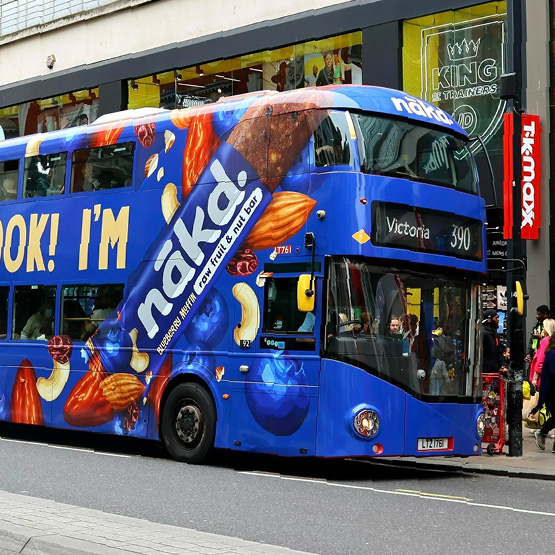
Bus advertising is one of the most popular and cost-effective forms of outdoor advertising in the UK. Whether you’re a local business looking to build awareness in your town or a national brand wanting to reach audiences across the country, bus advertising delivers real impact at a price that works. In this guide, we answer the questions we get asked most often — no jargon, no waffle, just straight-talking answers from a team with over 20 years in the industry. If you’d like to skip straight to planning a campaign, visit our bus advertising page or get in touch for a free quote.
Bus cost & pricing
How much does bus advertising cost in the UK?
Bus advertising is one of the most affordable forms of OOH advertising available. For a standard format such as a bus rear or single decker side, you’re looking at approximately £80 to £100 for a two-week period. That’s an incredibly competitive price point for a format that reaches thousands of people every day.
One thing that makes bus advertising particularly good value is that adverts can often stay up a little longer than the period you’ve actually paid for. The reason is simple — suppliers won’t remove your advert until they have a replacement ready to go up. So unlike most other OOH formats, you can sometimes get a bit more than you paid for. It’s not guaranteed, but it’s common, and it’s one of the little bonuses that makes bus advertising stand out.
Bus advertising is one of the only OOH formats where you can get more than you paid for — suppliers won’t take your advert down until a replacement is ready.
What are bus advertising prices and rates?
Bus advertising prices do vary slightly depending on a few factors — the volume of buses booked, the number of different designs being used, the location and the supplier. However, one of the great things about bus advertising is that the rates are largely flat across the country. Unlike some other formats, advertising on buses in a big city like Edinburgh, London or Birmingham will cost you roughly the same as advertising in a more rural area. That makes it one of the most consistently cost-effective forms of OOH advertising available and one of the most popular formats we sell.
How much does bus wrap advertising cost?
Bus wrap costs vary quite significantly because a large part of the price is the production itself — producing the vinyl to wrap an entire bus isn’t cheap. However, when you break it down on a daily rate, it’s incredible value. A mega rear, which covers the whole back of the bus, is very good value for money — particularly if you book it for 52 weeks. For a full year, you’re looking at around £6,000 to £7,000, which works out at roughly £16 per day. That’s an extraordinary rate for the level of visibility you get.
For a full bus wrap — covering the entire bus including windows — you’re looking at a significantly bigger investment, typically between £25,000 and £40,000 for a year depending on the location, the style of the wrap and whether the windows are covered. The production costs are a major part of this figure, but the impact is unmatched.
Break your bus wrap cost down into a daily rate and it’s one of the best value formats in outdoor advertising. A mega rear works out at around £16 a day for a full year.
How much does London bus advertising cost?
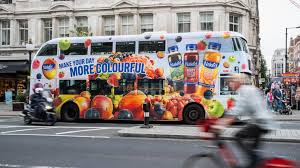
This is one of the most common questions we get and the answer often surprises people — London bus advertising costs exactly the same as advertising anywhere else in the UK for standard formats like bus rears and single decker sides. The rate is flat across the country, which makes London buses exceptional value given the sheer volume of people who will see your advert.
The only time you’ll pay a premium for London buses is if you’re looking at Central London specific packages — things like Golden Routes or Routemaster packages. These are more expensive, but they more than justify the price increase because the impacts are significantly higher. When you look at the cost per thousand people reached, these premium London packages can actually be cheaper than standard formats elsewhere.
Bus formats & options
What is bus advertising?
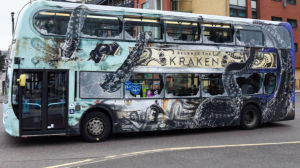
Bus advertising does exactly what it says on the tin. You can advertise on the back of a bus, the side of a bus, inside a bus, or wrap the whole thing. It’s a powerful, high-visibility form of media and one of the most popular forms of outdoor advertising across the world. Buses go where the people are, and your advert goes with them.
What are the different bus advertising formats available?
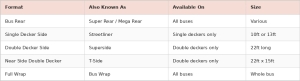
Bus operators don’t miss a single opportunity when it comes to advertising space — there’s a format for every part of the bus. Here’s a quick rundown of the main options:
What is a T-side bus advert?
The T-side is generally considered one of the more premium spaces on a double decker bus — and it’s only available on double deckers, not single deckers. T-sides are larger and more expensive than other formats and are typically sold in packs rather than individually. But the price is justified — a T-side is 22 feet long and approximately 15 feet high, so it absolutely carries the wow factor.
T-sides are available both across London and UK wide, subject to availability, and are a great choice for brands that want maximum visual impact and a genuinely eye-catching presence on the road.
What is a superside bus advert?
A superside is the advertising panel on the side of a double decker bus — it’s only available on double deckers and is produced in four sections. At 22 feet long, it’s a large, impactful format that’s available across London and UK wide. If you want a prominent roadside presence with the mobility of bus advertising, the superside is a great option.Contact us today for a free no-obligation quote.
What is a bus streetliner?
A streetliner is the single decker equivalent of the superside — available on single decker buses UK wide and one of the most popular bus advertising formats we sell. Streetliners are available on both sides of the bus and are booked as single panels. They generally come in two sizes depending on the bus operator — the most common and traditional size is 13 feet, though some operators offer a 10 foot version.
What is full wrap bus advertising?
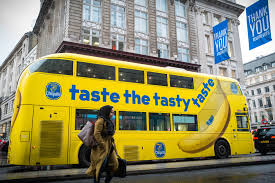
A full bus wrap does exactly what it says — the entire bus is wrapped in a vinyl designed to promote your business. Wraps are typically booked for a minimum of 12 weeks up to a full year, and on a daily rate basis they represent exceptional value for money. Some bus depots will also allow advertising across the windows for an extra touch of impact.
Full bus wraps are a hugely powerful form of media — a wrapped bus driving around a town or city is impossible to ignore. If you’re interested in finding out more, take a look at our bus advertising page or get in touch to discuss what’s available in your area.
Finding & booking
How do you advertise on a bus in the UK?
The best way to advertise on a bus in the UK is to use an experienced agency like Focus Media Outdoor. We’ll guide you through the different depots, areas, formats and rates, and help you put together the best campaign for your budget. Going through an agency means you avoid paying rate card prices — and with over 20 years in the industry, we know exactly which depots offer the best value and how to get the most out of every pound you spend.
Which companies offer bus advertising in the UK?
Most bus advertising in the UK is available on Arriva, Metroline and First Bus vehicles, with the media contracts typically held by Global Media. However, working directly with a supplier means paying rate card prices. Going through a local agency with established relationships in the industry will often get you a better rate and a more tailored campaign.
Effectiveness
What are the advantages of bus advertising?
Bus advertising is consistently one of the most popular OOH formats we sell — and the reasons are straightforward. It’s well priced, hugely effective and very easy to implement. Buses go where your audience goes, covering towns, cities and high streets day in, day out.
The one thing to be aware of is that with bus advertising, you can’t pick specific routes — you can only select areas and depots. So if you need to target a very specific location, such as outside a particular venue or competitor, you’d be better served by a static format like a bus stop advert, a billboard or a digital screen. But for broad area coverage, bus advertising is hard to beat.
How effective is bus advertising compared to other formats?
Bus advertising is extremely effective, particularly when you look at it from a cost per thousand perspective. To put it in context — a single underground advert at Piccadilly Circus could cost you up to £5,000. For the same budget, you could have 50 buses on the road for a minimum two-week period. That’s the scale of the difference.
We get repeat customers year in, year out with bus advertising. The proof really is in the pudding — businesses keep coming back because it works.
For the same budget as one Piccadilly Underground panel, you could run 50 buses for two weeks. It’s all about putting your budget in the right place.
General Knowledge
What is the difference between bus advertising and bus stop advertising?
The key difference is simple — one moves and one doesn’t. Bus advertising is a moving format, which means your creative needs to work hard and fast. Keep it bold, keep it simple and don’t make it too busy — people won’t have long to read it as the bus goes past. Bus stop advertising is static, which means people have more time to read and take in your message.
The other key difference is targeting. With bus stop advertising you can cherry pick an exact location — right outside a specific shop, school or venue. With bus advertising you can only select a depot and area, so the coverage is broader but less precise.
In our experience, the best campaigns use a mix of both. Don’t put all your eggs in one basket — a combination of bus advertising for broad coverage and bus stop advertising for targeted locations gives you the best of both worlds. The key is not to spread your budget too thin — better to do two formats well than four formats poorly.
The best OOH campaigns mix formats. Bus advertising for broad area coverage, bus stop advertising for precise location targeting. Together they’re a powerful combination.
Ready to Book Bus Advertising
Get in touch with the team at Focus Media Outdoor. We’ll find the right buses, the right formats and the right areas for your budget — and handle everything from booking to print production. Contact us today for a free no-obligation quote.